Korea marks its first snow, cheotnun, the way other countries mark the first cherry blossom: friends message each other, couples make plans, and the city stops for a moment to look up. Here is when it usually arrives in each city, when it came last winter, what to expect in 2026, and where to find snow first.
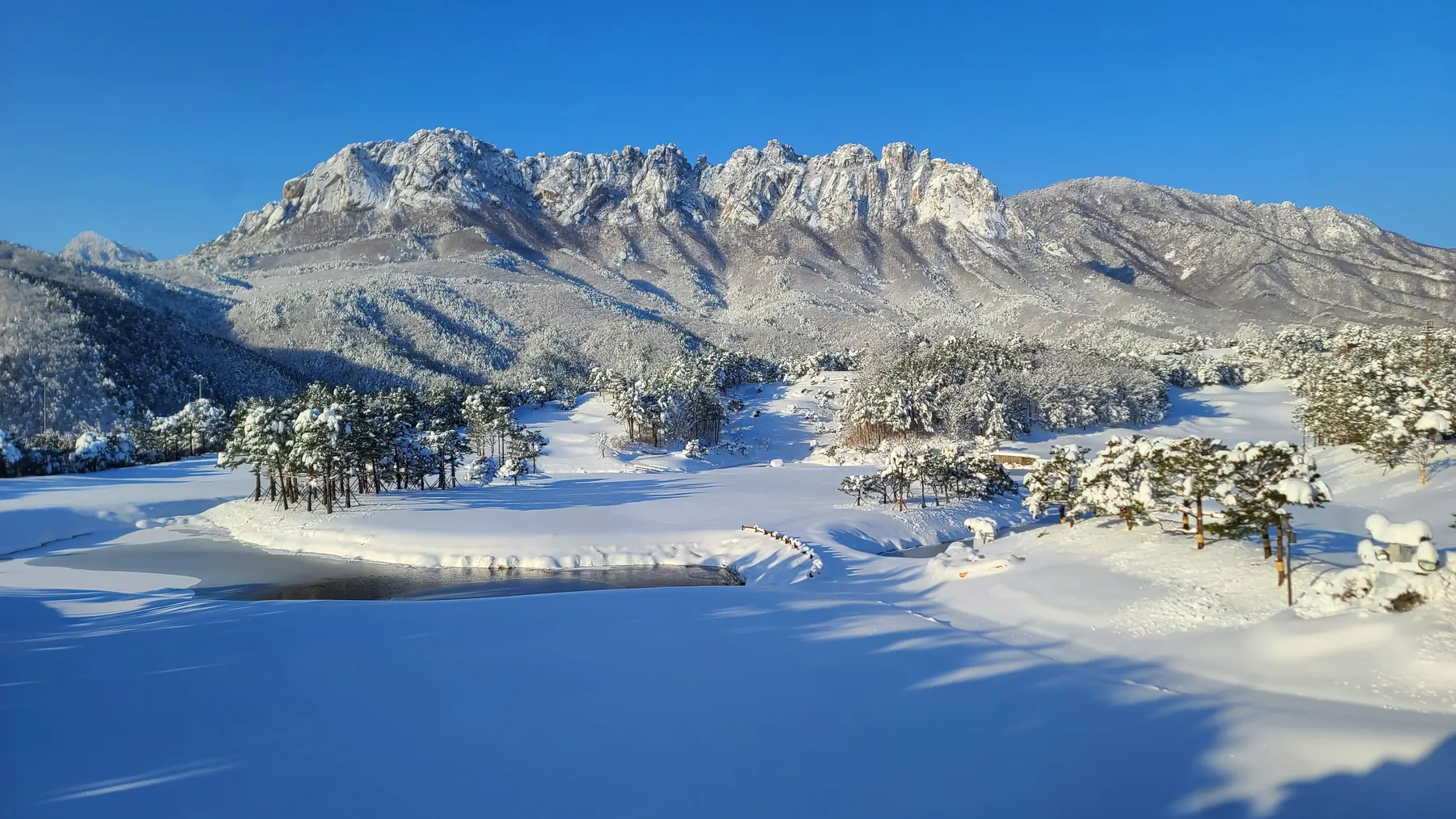
Seoraksan, where Korea's snow season begins
Know the first snow dates by city
The date to remember is 20 November: the Korea Meteorological Administration's average first snow date for Seoul, taken from its 1991 to 2020 climate normals. Snow moves down the country from there. The mountains of Gangwon see it weeks earlier, the capital region and the centre of the country in late November, the southwest and Daegu in early December, and Busan, if at all, around Christmas.
First snow in Korea
Where
Average date
Last winter
Expected in 2026
Gangwon mountains (Seoraksan, Daegwallyeong)
Late October on the peaks
20 Oct 2025 (Seoraksan summit)
Early November
Seoul
20 Nov
4 Dec 2025
Around 28 Nov
Chuncheon
21 Nov
4 Dec 2025
Around 25 Nov
Incheon
23 Nov
4 Dec 2025
Around 29 Nov
Suwon and southern Gyeonggi
21 Nov
4 Dec 2025
Around 29 Nov
Daejeon
20 Nov
3 Dec 2025
Around 1 Dec
Gwangju
29 Nov
2 Dec 2025
Around 5 Dec
Daegu
5 Dec
4 Dec 2025
Around 8 Dec
Jeju City (coast)
10 Dec
3 Dec 2025
Mid December
Busan
23 Dec
7 Feb 2026
Around 27 Dec, if at all
Average dates: Korea Meteorological Administration, 1991 to 2020 normals. Expected dates are an unofficial estimate, not a forecast.
Expect a later first snow in 2026
The Korea Meteorological Administration's seasonal outlook points to a warmer than usual November, which tends to delay the first flakes. Last winter followed the same pattern: Seoul's first snow came on 4 December 2025, fourteen days after the average, and most of the capital region and the centre of the country were close to two weeks late.
The expected dates in the table above follow that reasoning, combining the long term averages with this year's warm outlook. They are a planning guide, not a promise. First snow in Seoul has come as early as late October and as late as the last day of December, so build a winter trip around the season, never around a single day.
Understand what counts as first snow
It is one observer, at one station
Seoul's official first snow is whatever the observer at the Seoul weather station in Songwol-dong, Jongno, sees fall. Snow across the river in Gangnam does not count if none reaches the station.
Sleet counts, and nothing has to settle
Snow, sleet or snow pellets seen falling, even for a few minutes and even overnight, are enough. Many first snows leave no snow on the ground at all, so read a "first snow observed" headline as a moment, not a white city.
Snow that stays comes later
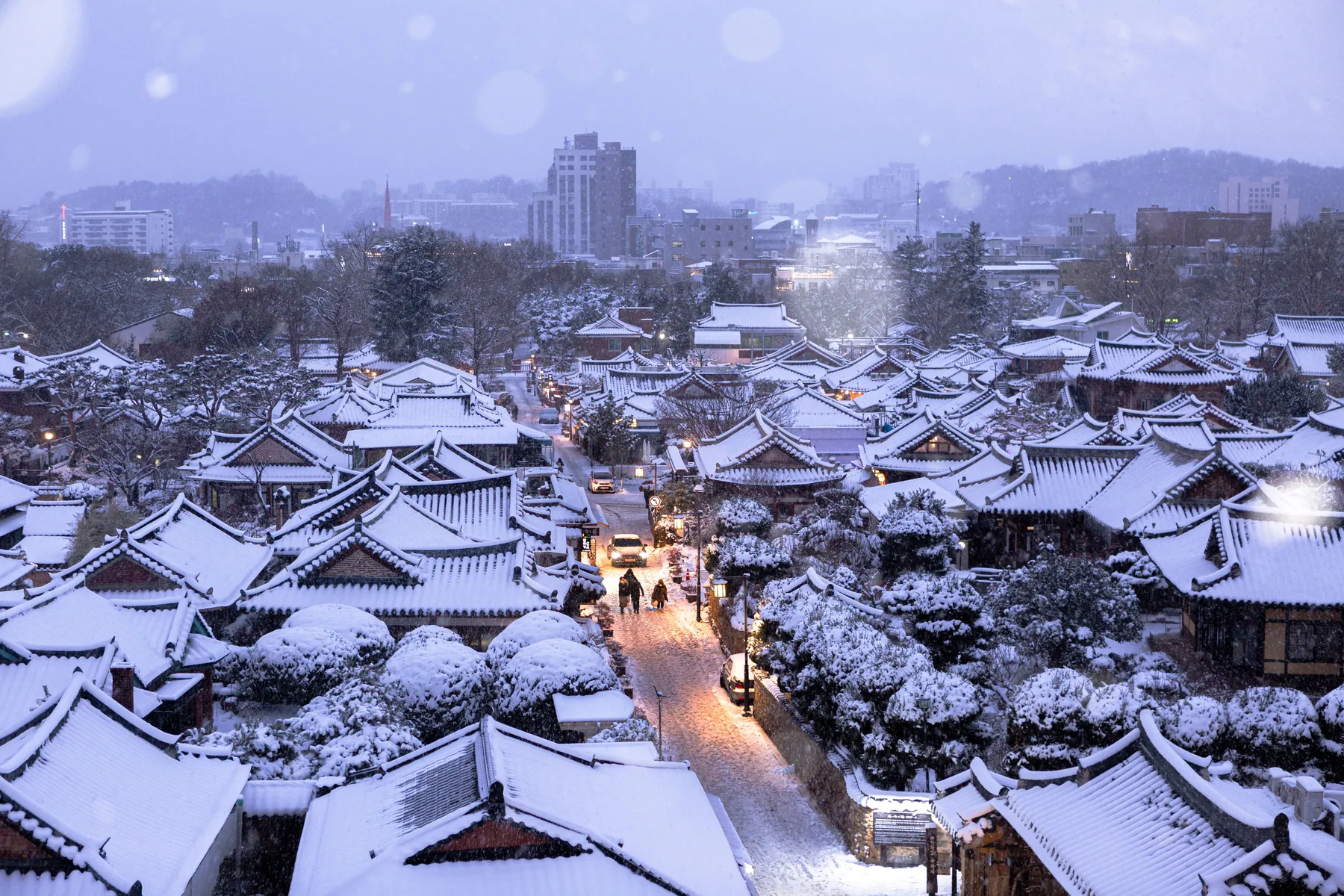
For roofs, palaces and parks under snow in Seoul, the best odds are from mid December to February. In the mountains of Gangwon, snow stays on the ground through most of the winter.
Find the snow before the cities do
If seeing snow is the point of the trip, go up, not north.
Seoraksan and the Gangwon mountains
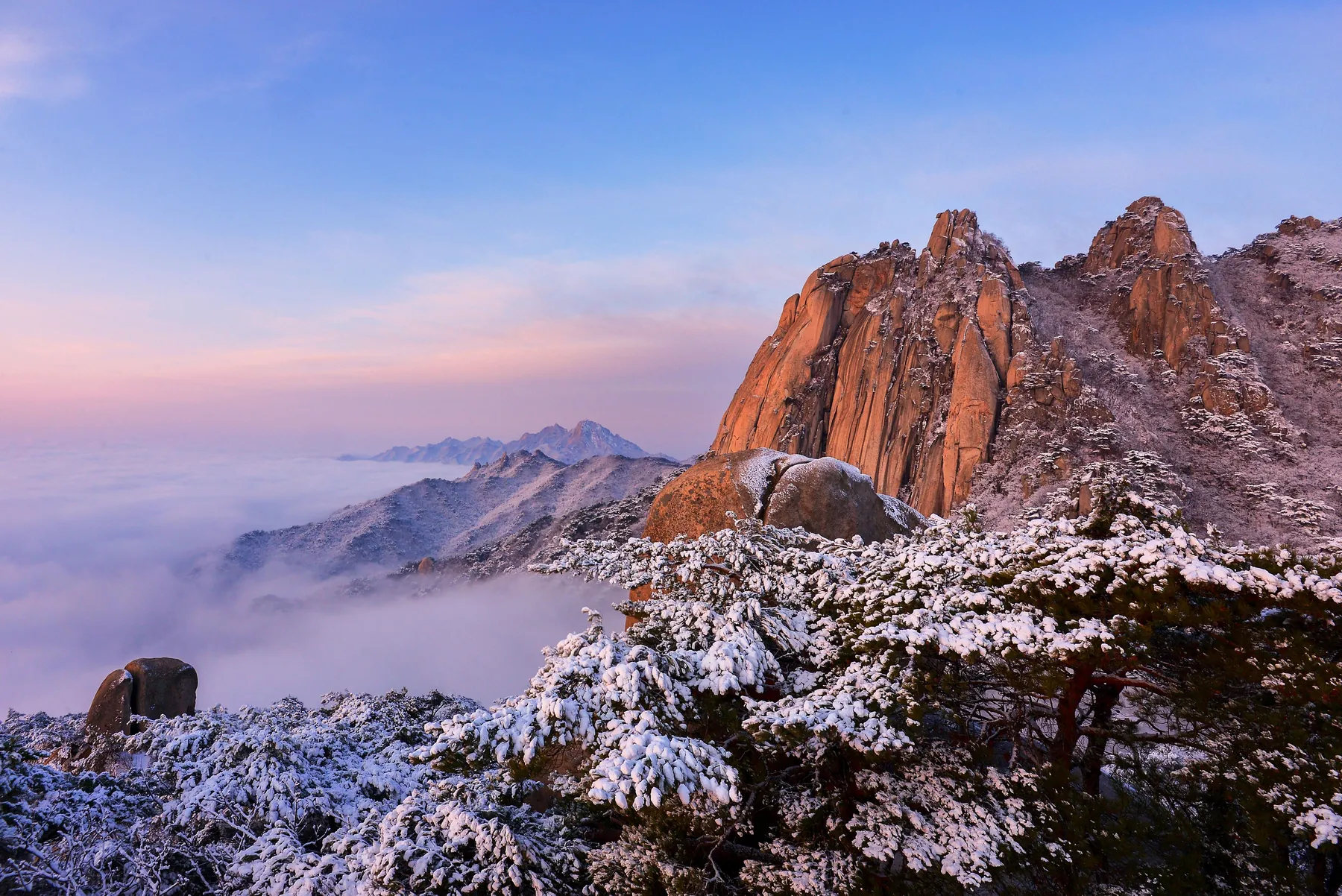
The high ridges of Seoraksan are usually the first place in Korea to turn white, often in the second half of October, while the valleys below are still in autumn colour. Daegwallyeong and the high meadows of Pyeongchang follow in November.
Hallasan on Jeju
Jeju's coast rarely sees snow before December, but the uplands of Hallasan often turn white from mid November, with rime frost on the trees even before the first real snowfall.
The ski resorts
Resorts such as Yongpyong and High1 open in late November or early December, depending on the cold, with snow underfoot whatever the cities are doing. See our guide to Korea in December for the main resorts.
Dawn over the snow covered peaks of Gangwon
Plan a trip around the snow
For snow on the palaces of Seoul, travel from mid December and keep one morning free to go out the day after a snowfall. For snow you can count on, add two or three nights in Gangwon, with a hanok warmed by ondol floors or a hot spring at the end of the day. Our Winter Retreat is built around exactly this, and we watch the forecast for you while you travel and move the day to meet the snow.
A hanok village under the first snow
Ask the common questions
When does Seoul usually get its first snow?
Around 20 November. That is the Korea Meteorological Administration's average first snow date for Seoul, based on its 1991 to 2020 climate normals. Last winter it came on 4 December 2025, two weeks late, and the winter before on 26 November 2024.
When will it first snow in Seoul in 2026?
Most likely in the last days of November or the first days of December. The Korea Meteorological Administration expects November 2026 to be warmer than usual, which tends to push the first snow later than the 20 November average. Treat any single date as a rough guide: first snow can arrive weeks either side of it.
Where can I see snow in Korea in November?
In the mountains. The high peaks of Seoraksan in Gangwon usually see their first snow in late October, the uplands of Hallasan on Jeju from mid November, and the Gangwon ski resorts open in late November on machine made and natural snow.
Does first snow mean there will be snow on the ground?
Not necessarily. Korea's official first snow is the first time an observer at the city's weather station sees snow or sleet fall, even for a few minutes. For snow that settles in Seoul, plan for mid December to February.
Does it snow in Busan?
Rarely. Busan's average first snow date is 23 December, among the latest of Korea's cities, and in some winters it barely snows at all. For snow, go north to Gangwon or up into the mountains.
Sources: Korea Meteorological Administration climate normals (1991 to 2020) and winter reports, and its seasonal outlook for autumn 2026, via KMA Weather Nuri.
Travel With IEUM
Plan a private winter in Korea
Snow in the mountains, hot springs, a kimjang table and the bell at midnight, arranged end to end with a concierge beside you throughout. Tell us a little about your trip and we will reply personally, usually within a day.